NEW INITIATIVE · SCHOOL STEM LABORATORY
NPG ResearchLab
Our working school laboratory: real sensor measurements, 24-hour graphs and STEM investigations.
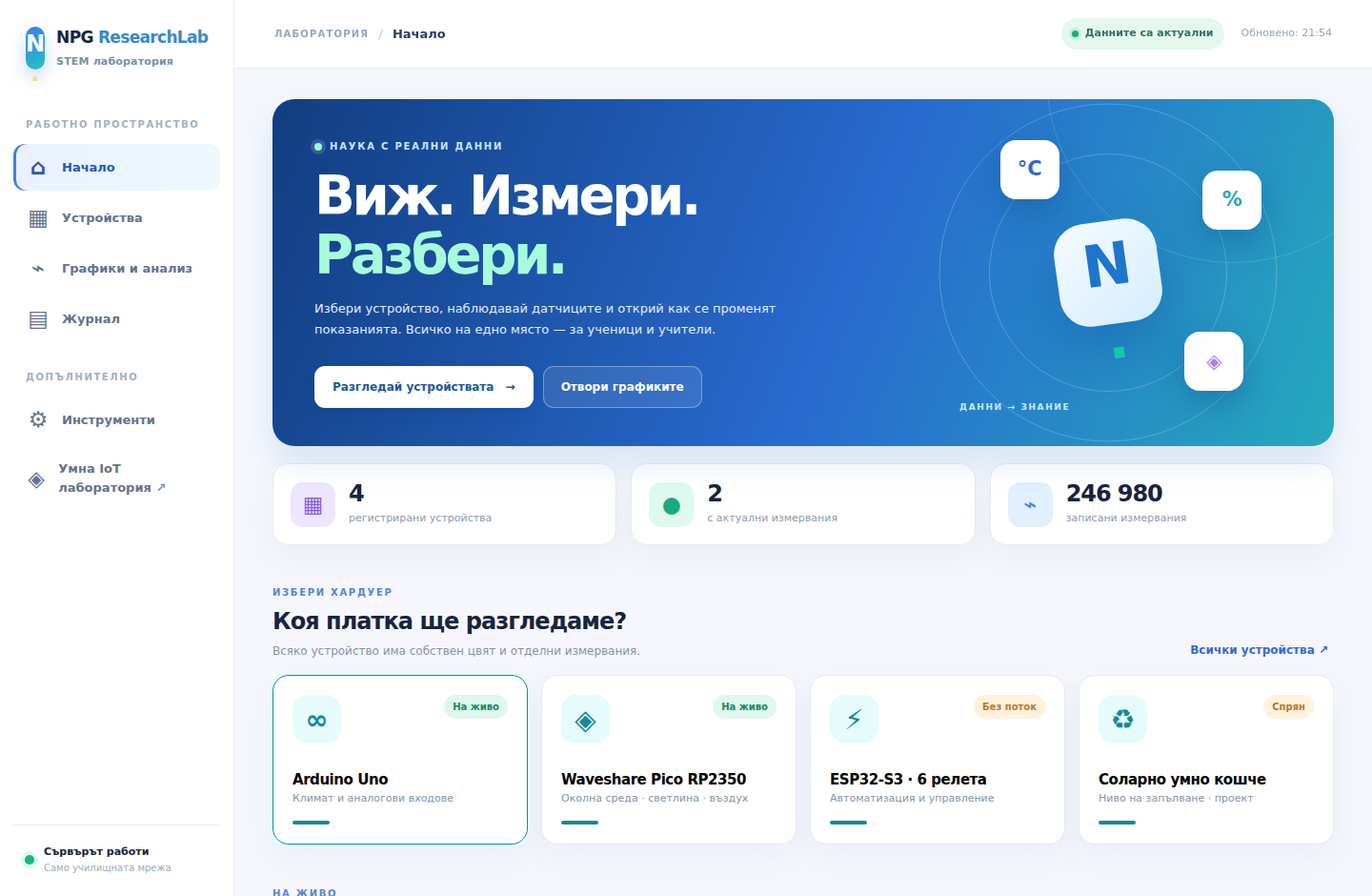
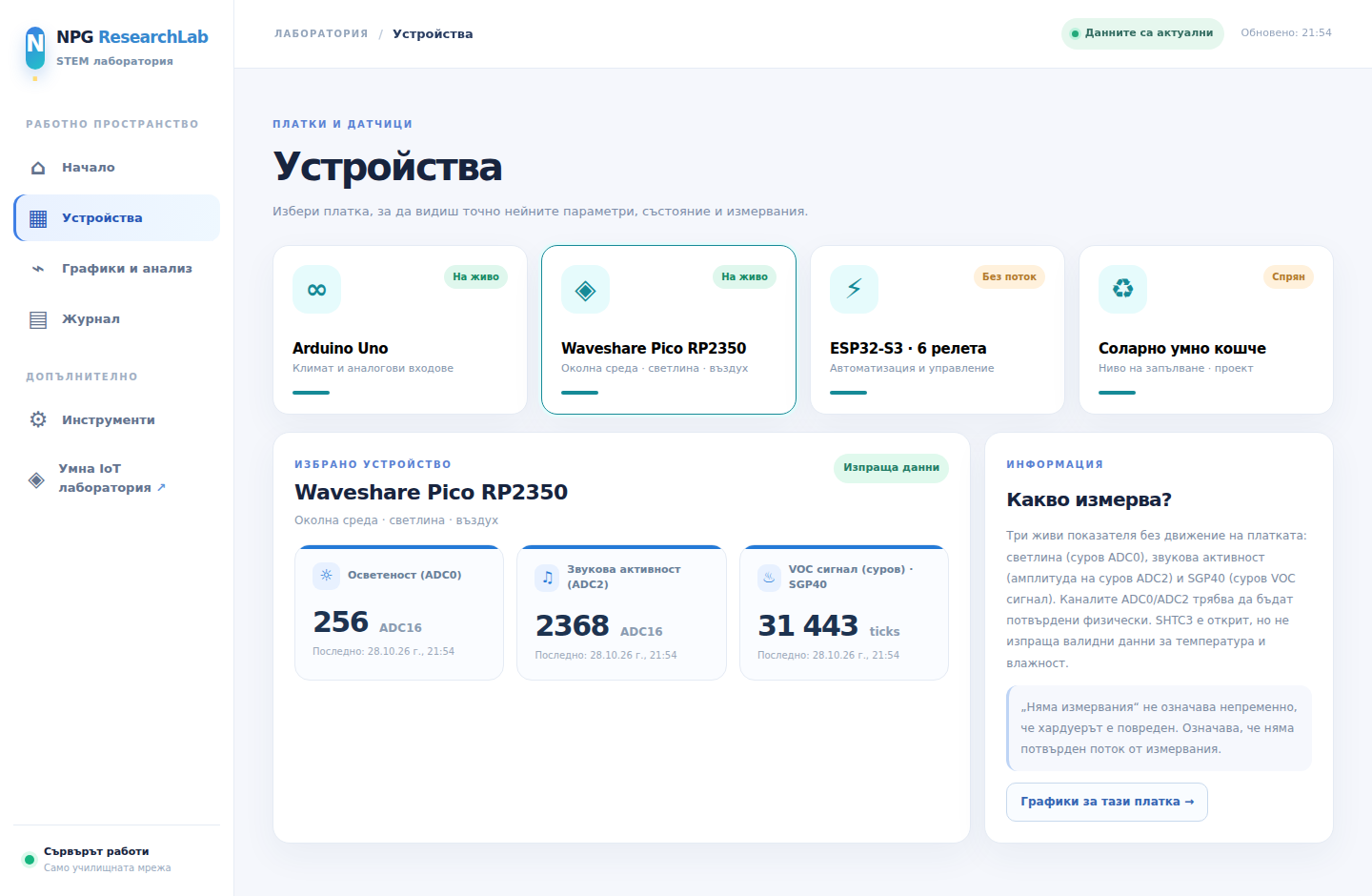
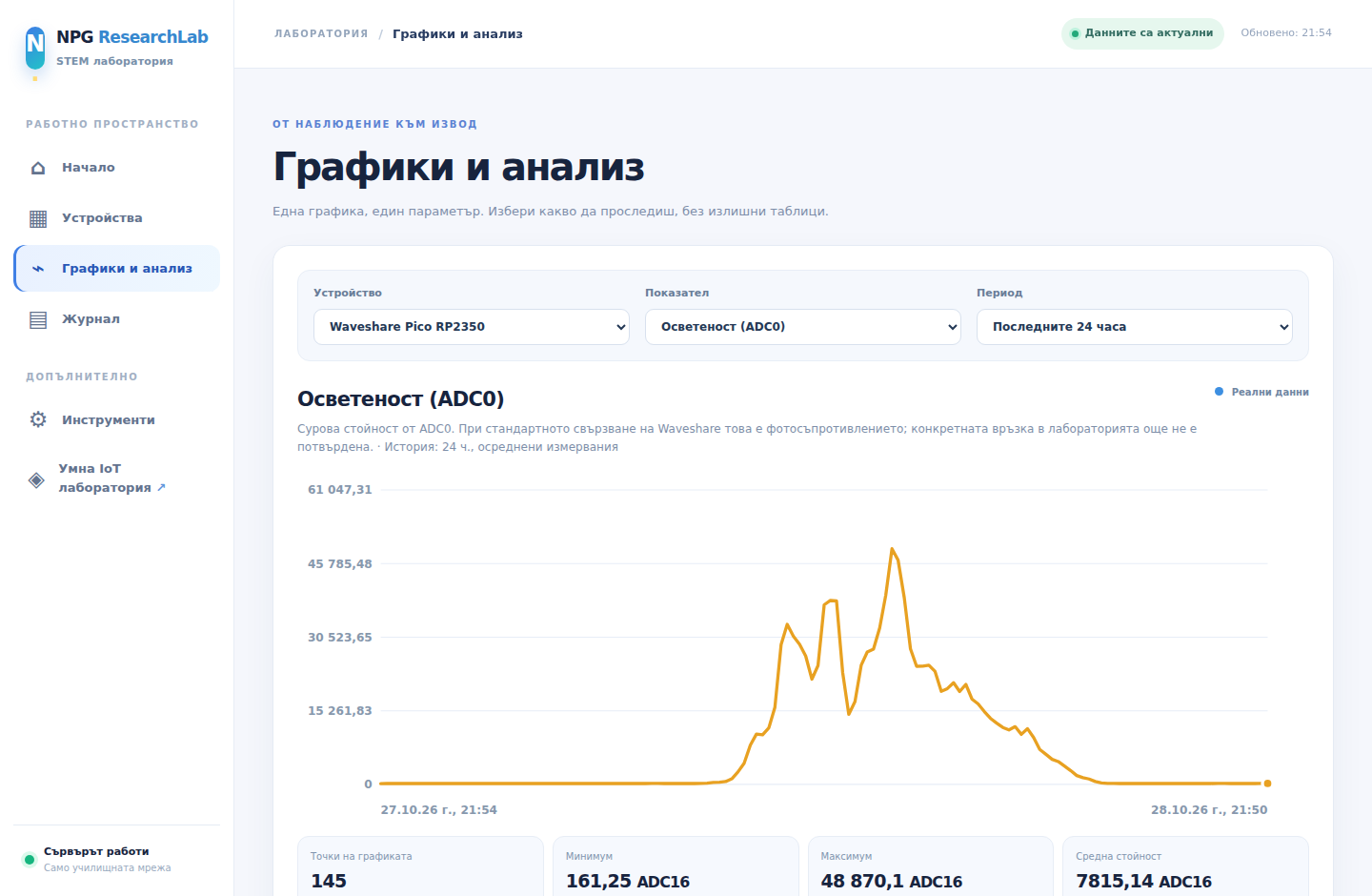
The screenshots above come from the running school system. The photos further down the page are from actual student projects already documented by Robotics NPG.
We measure with microcontrollers, store the results of the school server and turn them into graphics, comparisons and scientific conclusions. The platform is designed for practical robotics, electronics, automation and green technologies.
Arduino · ESP32-S3 · Pico RP2350Python / FlaskMariaDBCharts and CSV
Privacy and safety: The laboratory operates within the school network. Only selected read-only sensor data and authentic screenshots are published here; no public access is provided to administration, the database or the physical relay outputs.
REAL DATA · READ-ONLY
Actual measurements from our school
The measurements below are updated from the local ResearchLab without exposing the school network, administrative interface or hardware controls.
Checking the last verified reading…
Recorded values over the last 24 hours
The public chart is built exclusively from actual sensor readings. Time is on the horizontal axis; the vertical axis shows the selected value. Measurements are averaged into 10-minute buckets.
Light, sound and SGP40 values are raw sensor signals. They are not calibrated lux, decibels, CO₂ or VOC concentration. Values may stop updating outside laboratory operating hours.
PRESENTATION OF THE PATFORM
From measurement to reasoned conclusion
An environment for collecting, storing and analyzing results of study and scientific experiments.
Devices and sessions
Registration of Arduino, ESP32 and other devices; organisation of measurements by individual experiments.
Operational with real dataData Receiving
Manual input and automated obtaining measurements through a secure local HTTP interface.
Operational with real dataGraphs and statistics
Visualization of recorded measurements, minimum, maximum and average of selected parameter.
Operational with real dataArchive and Export
Separate MariaDB database and CSV export after-treatment in spreadsheets.
Operational with real dataMore Interfaces
Active USB telemetry and MQTT for the separate IoT laboratory.
OperationalComparison of experiments
Advanced comparative analysis between sessions and connecting with adaptive textbooks.
Further developmentFROM OUR SCHOOL PRACTICE
Real Robotics NPG projects
The following images are from realized school projects. They show the experience gained with electronics, sensors, automation and experimental systems — are not photos from the new platform.
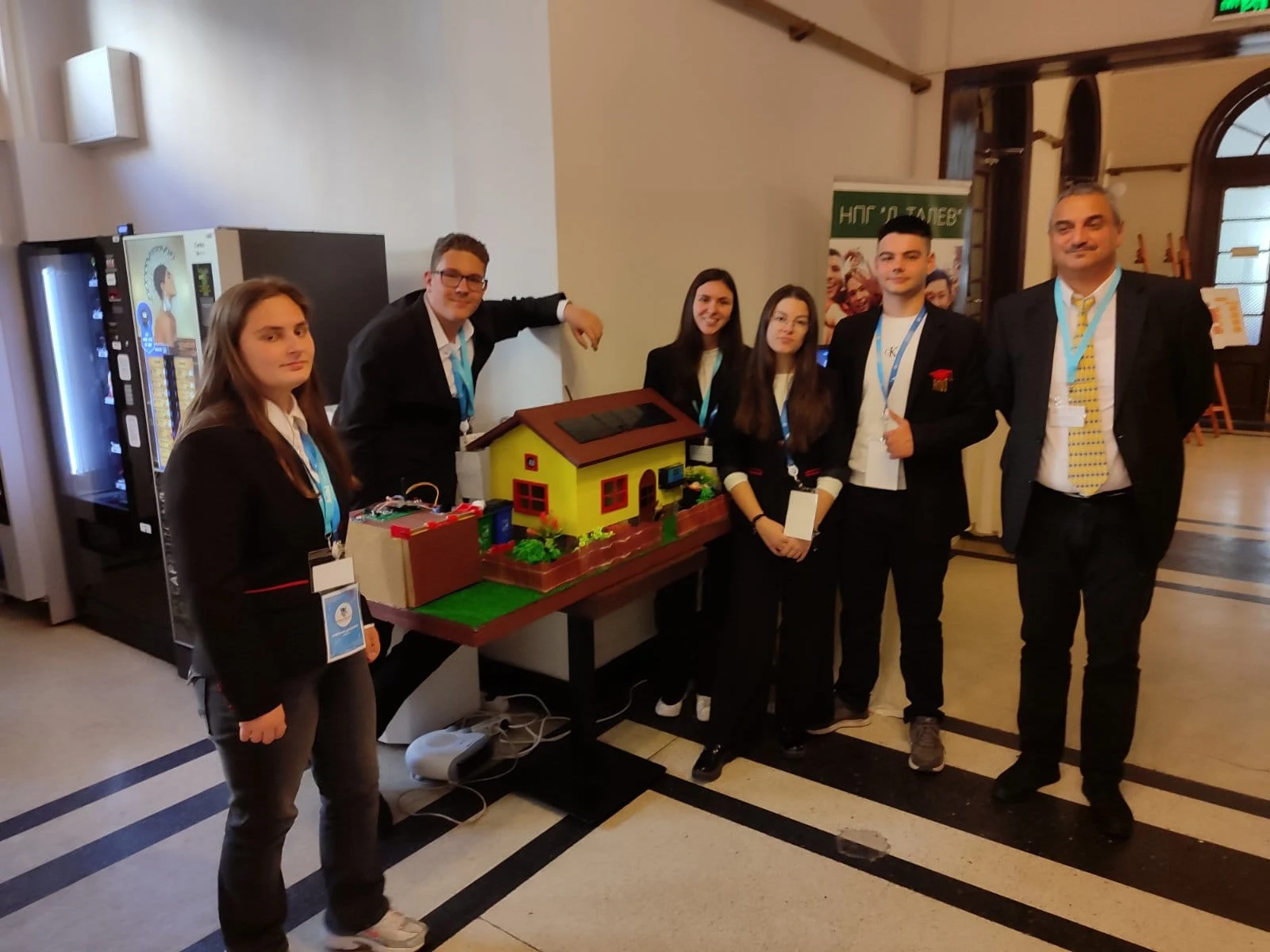
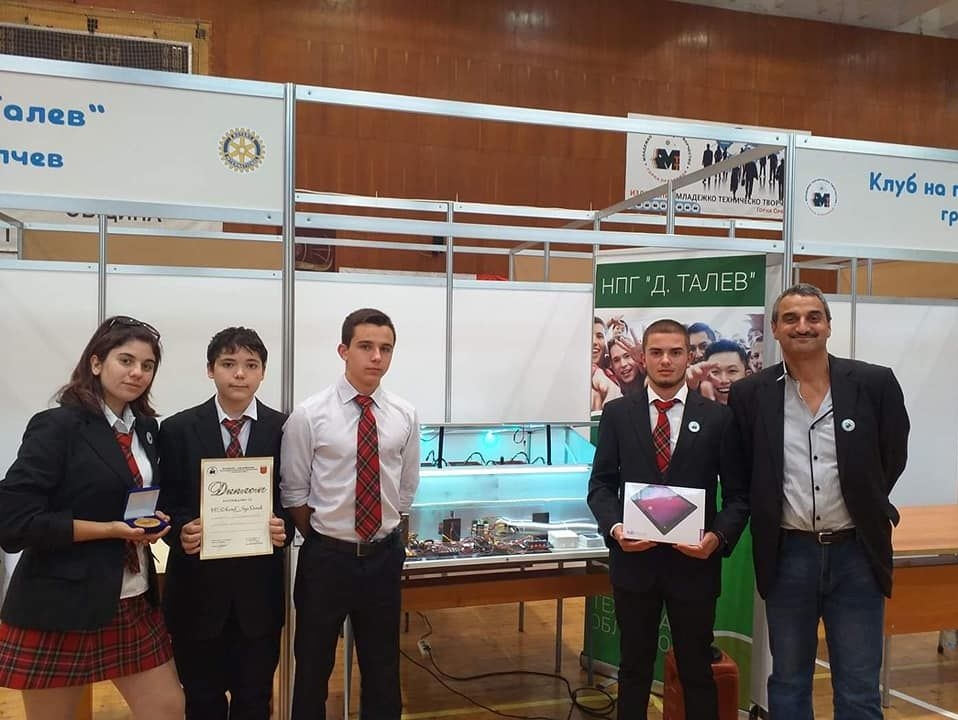
The photographs come from the real Robotics NPG archive. The screenshots above are captured from the running ResearchLab. Sensor values are read-only and may be temporarily unavailable when school devices are offline.
ANNEX IN THE LEARNING
Study experiments, not cloud service
The system is designed to work with real devices in the school STEM laboratory.
Robotics and microcontrollers
Recording of sensor data, analogue inputs, motors and execution mechanisms.
Electronics and automation
Monitoring of electrical quantities and processes, processing results and comparison of experiments.
Green technologies
Upcoming learning experiences with solar panels: voltage, current, power and orientation influence.
Summer Academy
Practical STEM classes where students conduct experiments, visualize the result and explain it.
Our Purpose
Students to work with true physical quantities and self-collected data, not only with pre-prepared graphics. The storage and main analysis are on the school server. Remote administrative access is separate and protected.
ROBOTICS NPG · DELCHEV
From the study sensor to the scientific study
Every new measurement set-up adds opportunities to our local school lab.